
Is Gum Disease a Dealbreaker for Dental Implants?

A Common Concern for Implant Patients
Many people visit the dentist hoping to restore their smile, only to be told they aren’t candidates for dental implants because of gum disease. It can be a disheartening moment. You might feel like you have missed your chance to have a stable, beautiful smile again. If you have been told your oral health isn’t ready for implants, it is natural to feel like your journey has hit a dead end.
However, having a history of periodontal problems does not automatically disqualify you from getting dental implants. While active infection is a hurdle, it is rarely an immovable wall. Modern dentistry offers many pathways to restore health first, making it possible to support implants later. With the right planning and care, a past struggle with gum health can become a manageable part of your dental history rather than a permanent barrier to your future smile.
Understanding Gum Disease
Gum disease, or periodontal disease, is an infection of the tissues that support your teeth. It usually begins when plaque, a sticky film of bacteria, stays on the teeth for too long. Over time, this plaque hardens into tartar, which can only be removed by a professional cleaning.
There are two main stages of this condition:
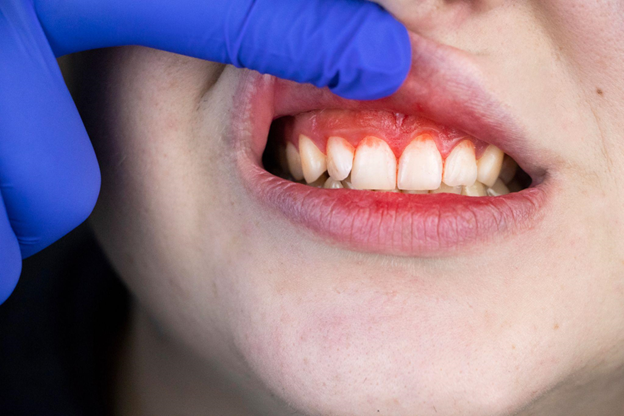
- Gingivitis: This is the earliest stage. You might notice red, swollen gums that bleed when you brush or floss. At this point, the bone hasn’t been damaged yet.
- Periodontitis: If left untreated, the infection can spread deeper. The gums pull away from the teeth, creating pockets that collect more bacteria. As the body tries to fight the infection, it begins to break down the bone and connective tissue that hold teeth in place.
Healthy gums are the anchor for your teeth. They act as a seal around the tooth root, protecting the underlying bone from bacteria. For an implant to work, that same protective seal and sturdy bone support must be present.
Why Gum Health Is Critical for Implants
Dental implants are not just fake teeth. They are titanium posts that act as artificial tooth roots. For an implant to stay in place, it must undergo a process called osseointegration, in which the jawbone grows around and bonds to the metal post.
If you have an active infection in your mouth, that bond is at risk. Bacteria from gum disease can travel to the site of the new implant. This can lead to a condition called peri-implantitis. Much like periodontitis affects natural teeth, peri-implantitis causes inflammation and bone loss around the implant. If the bone around the post melts away, the implant becomes loose and will eventually fail.
Long-term stability depends on a clean, infection-free environment. Without healthy gums to protect the site, the implant lacks the shield it needs to stay functional for years to come.
When Gum Disease Is Treatable Before Implants
If you have mild to moderate gum disease, you are likely still a candidate for implants—you just need to take a detour through periodontal therapy first. The priority is to stop the infection and control the inflammation.
One of the most common treatments is scaling and root planing. This is a deep cleaning that goes beneath the gum line to remove tartar and smooth out the tooth roots so bacteria can’t stick to them as easily. After this therapy, the gums need time to heal and reattach to the teeth. Once your dentist confirms that the infection is gone and that your gum pockets have shrunk, you can proceed with the implant process.
Advanced Gum Disease and Bone Loss
In more severe cases, periodontitis does more than just inflame the gums; it destroys the jawbone. Since implants need a certain amount of bone volume to sit securely, significant bone loss can make placement difficult.
Fortunately, bone loss is often reversible through bone grafting. This involves placing bone material in the area where the jaw has thinned. Over several months, your body uses this material to rebuild new, strong bone. Regenerative periodontal treatments can also help regrow lost soft tissue. While these steps add time to the schedule, they provide the necessary support for a successful implant.
How Dentists Evaluate Implant Candidacy
To determine if you can move forward, a dentist will perform a detailed examination. This isn’t just a quick look in your mouth; it involves:
- Imaging: X-rays or 3D scans show the exact height and width of your jawbone.
- Measuring Pockets: Using a small probe, the dentist measures the depth of the spaces between your teeth and gums to check for active disease.
- Assessing Density: They examine the bone’s quality to determine whether it can withstand the pressure of chewing.
- Reviewing History: Your medical history and habits, such as smoking, are reviewed because they can delay healing.
Also Read: Am I a Good Candidate for Dental Implants? A Complete Guide to Understanding Candidacy
Can Implants Still Succeed After Gum Disease?
The short answer is yes. Implants can be highly successful even for those who have struggled with gum issues in the past, provided the infection is fully controlled before surgery.
Success after gum disease requires a partnership between you and your dental team. You must commit to a high level of oral hygiene at home and never miss a maintenance visit. Ongoing care is the only way to catch early signs of reinfection before they threaten your investment.
What Treatment May Look Like
If you have gum disease but want implants, your journey will likely follow these phases:
- Phase 1: Treating Infection. This involves deep cleanings or medications to kill harmful bacteria.
- Phase 2: Restoring Health. If you have lost bone or gum tissue, grafting procedures are done to rebuild the site.
- Phase 3: Implant Placement. Once the mouth is healthy and the bone is strong, the implant is surgically placed.
- Phase 4: Long-Term Care. After the crown is attached, you will follow a strict schedule of checkups to monitor the health of the tissues around the implant.
Who May Need Alternative Solutions
While many people can get implants after treatment, there are some situations where other solutions might be better.
If a patient has severe, uncontrolled systemic disease that prevents healing or is unable to maintain oral hygiene at home, implants may be at high risk of failure. Heavy smoking also significantly lowers the success rate because it restricts blood flow to the gums. In these cases, your dentist might discuss bridges or specialized dentures that don’t rely on bone integration.
Also Read: Dental Implants vs. Bridges: What’s Best for Long-Term Oral Health?
Next Steps in Exploring Implants
If you have been told in the past that gum disease makes you a poor candidate for dental implants, do not give up hope. Every mouth is different, and new techniques in bone grafting and periodontal therapy have made implants possible for people who were once told “no.”
The only way to know for certain is to have a professional evaluation. Let us look at your specific situation and help you explore safe, reliable ways to restore your smile, even if you have a history of gum disease.
We invContact Smiles Santa Monica today to schedule a consultation.