How Veneers Can Improve Uneven or Irregular Tooth Edges


Uneven, jagged, chipped, or irregular tooth edges can affect the appearance of a smile even when the differences are relatively small. Variations in tooth length, shape, and proportion can make the front teeth appear less balanced or draw attention to one tooth that looks noticeably shorter or different from the others.
Can veneers fix uneven tooth edges? In appropriate cases, yes. Veneers can change the visible shape, length, contour, and proportions of teeth, making them an option when irregular edges affect the overall appearance of the smile. For patients considering [dental veneers in Santa Monica], treatment can be customized around the individual teeth rather than simply making every tooth look the same.
Veneers are not appropriate for every uneven tooth, however. The cause of the irregularity, condition of the enamel, bite, oral health, and amount of cosmetic change desired all matter. At Smiles Santa Monica, we evaluate those factors before recommending veneers or another cosmetic approach.
What Causes Uneven or Irregular Tooth Edges?
Tooth edges can look uneven for several reasons. Some people naturally have differences in tooth shape or length, while others notice changes over time because of wear, damage, or tooth position.
Common causes include:
Chipped enamel: Even a small chip can change the visible shape or length of a tooth.
Normal tooth wear: Everyday use can gradually alter the edges of teeth.
Grinding or clenching: Repeated pressure may contribute to worn or shortened tooth edges.
Previous dental trauma: An injury can change the shape or appearance of a tooth.
Differences in tooth development: Teeth may naturally develop with different shapes or proportions.
Uneven eruption or positioning: The way teeth emerge or sit next to one another can affect how even the smile appears.
Enamel wear can be particularly noticeable on the front teeth because relatively small changes to their edges can alter their apparent length and proportions.
It is also important to distinguish a cosmetic irregularity from a dental problem that needs restorative or preventive care. Naturally uneven teeth are not necessarily unhealthy. Damage, significant wear, cavities, gum concerns, or other dental problems should be evaluated before cosmetic treatment.
Also Read: When Veneers Make Sense for Mildly Crooked Teeth
Can Veneers Fix Uneven Tooth Edges?
In the right situation, veneers can do more than smooth the appearance of a single uneven edge. Because each veneer is designed around the individual tooth, treatment can adjust how several front teeth relate to one another in length, shape, and proportion.
Custom veneers can be designed to alter:
- Tooth length
- Edge symmetry
- Tooth proportions
- Visible tooth shape
- The relationship between adjacent teeth
- Overall smile uniformity
This can be particularly useful when several front teeth have noticeable differences in length, shape, or proportion. Rather than treating each edge in isolation, veneers can be planned so the visible teeth work together as part of the overall smile.
Veneers change the visible surface and contour of a tooth, but they do not correct every underlying dental problem. If irregular edges are related to bite forces, significant tooth wear, alignment, decay, or another dental condition, those factors may need to influence the treatment plan.
Depending on the patient’s goals, veneers may also be incorporated into a broader smile makeover.
Veneers vs. Tooth Reshaping for Uneven Teeth
Not every uneven tooth needs a veneer. When the difference is relatively minor, tooth reshaping, also called dental contouring, may be enough to create a smoother or more balanced edge.
Tooth reshaping involves making small adjustments to existing enamel rather than adding a restoration. It may be appropriate when the irregularity is minor, and enough healthy enamel is available to make the desired adjustment safely.
Veneers may provide a more substantial cosmetic change when the concern involves tooth length, shape, proportions, or several visible teeth rather than one small edge irregularity.
- The choice depends on factors such as:
- The size and cause of the irregularity
- The amount and condition of existing enamel
- How much change the patient wants
- The appearance of neighboring teeth
- Bite and tooth position
- Long-term treatment considerations
A cosmetic dental evaluation can help determine whether adding material, removing a small amount of enamel, or taking another approach makes the most sense.
What About Dental Bonding?
Dental bonding may also be considered when the goal is to add material to a chipped, short, or irregular edge without placing a veneer. It can be useful for relatively limited cosmetic changes, while veneers may be considered when the treatment plan involves broader changes to the shape, proportions, color, or appearance of multiple teeth.
The decision is not simply about which treatment changes the tooth more. Existing enamel, bite forces, the number of teeth involved, cosmetic goals, and long-term maintenance all factor into the recommendation.
For some patients, one approach may clearly fit the concern. For others, more than one cosmetic option may be reasonable, making the consultation an important part of deciding how much treatment is actually necessary.
Also Read: Choosing the Right Shade and Shape for Veneers That Match Your Features
How Veneers Improve Irregular Tooth Shape and Smile Symmetry
Veneers are custom-designed to change the visible shape, length, contour, and proportions of individual teeth. The goal is not necessarily to make every front tooth identical.
When planning veneers for irregular edges, we consider how each tooth relates to those beside it. This matters because naturally occurring differences in tooth anatomy should be considered as part of the overall design rather than simply making every tooth look identical.
The shape, length, contour, and translucency of veneers can all influence the finished appearance. When several front teeth are involved, their visible edges can be planned together to create a more consistent relationship while still preserving natural-looking differences in tooth shape and proportion.
That distinction is important. Natural smiles contain subtle variations. A carefully planned veneer result should complement the patient’s existing features rather than applying the same shape and proportions to every smile.
What to Expect When Getting Veneers for Uneven Teeth
The process begins with a consultation and dental evaluation. Before recommending veneers, we may assess:
- Tooth structure
- Existing restorations
- Bite
- Gum health
- Tooth alignment
- The cause of the irregularity
- The cosmetic changes you would like to make
For uneven tooth edges specifically, this evaluation helps determine whether the concern is primarily cosmetic or whether wear, bite forces, alignment, or another dental issue should be addressed before changing the visible edge.
If veneers are selected, the general process may include:
Consultation and evaluation: We examine your teeth and discuss what bothers you about their current shape, length, or appearance.
Smile and tooth-shape planning: The desired length, shape, proportions, and relationship between the treated teeth are considered.
Tooth preparation when indicated: Depending on the treatment plan, some preparation may be necessary.
Veneer fabrication: Customized veneers are created according to the planned design.
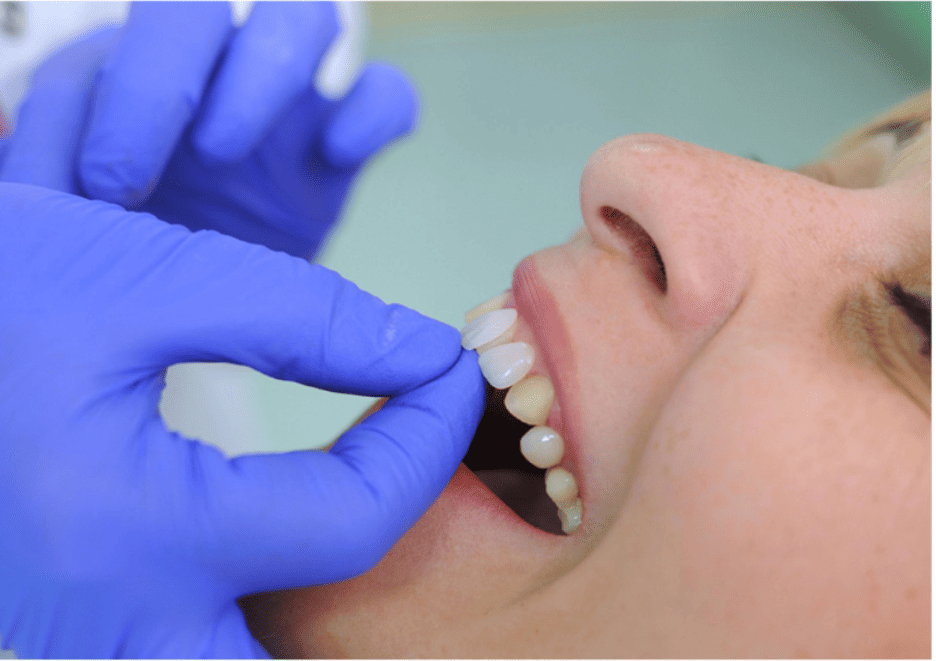
Try-in and evaluation: The veneers can be evaluated before final placement.
Final placement: Once the planned appearance and fit have been evaluated, the veneers are placed.
The exact timeline varies according to the individual case and laboratory process.
Are Veneers a Good Option for Uneven Teeth?
Veneers can be appropriate for some patients with uneven or irregular tooth edges, but they are not automatically the right solution.
Adequate tooth structure and overall oral health are important considerations. Cavities, gum disease, significant enamel loss, or other dental problems may need to be addressed before cosmetic treatment.
The cause and extent of the uneven edge also matter. A small irregularity may be better suited to contouring or bonding. Orthodontic treatment may be considered when tooth position is contributing significantly to the appearance of the smile. Other situations may call for restorative treatment rather than a cosmetic veneer.
The goal of the consultation is therefore not simply to determine whether a veneer can cover an uneven edge. It is to determine which treatment can address the concern appropriately while accounting for the health and structure of the tooth.
Maintaining Veneers and Protecting Tooth Edges
Veneers require the same ongoing attention to oral health as the natural teeth around them. Regular dental examinations and professional cleanings remain important after cosmetic treatment.
Continue brushing and flossing consistently, and avoid habits that can damage natural teeth or restorations, such as biting hard objects or using your teeth as tools.
If you grind or clench your teeth, that should also be considered when planning and maintaining cosmetic dental work. Repeated forces can affect both natural tooth structure and restorations, so protecting the result may involve addressing those forces as part of the overall treatment plan.
Also Read: Porcelain Veneers for Deep Stains That Whitening Cannot Remove
Find Out Whether Veneers Are Right for Your Uneven Tooth Edges
Uneven tooth edges do not always require veneers. A small irregularity may be better suited to contouring or bonding, while veneers may make more sense when several visible teeth need changes in length, shape, proportion, or overall appearance.
If uneven, worn, chipped, or irregular tooth edges are affecting how you feel about your smile, schedule a cosmetic dentistry consultation with Smiles Santa Monica. We can evaluate your teeth, bite, existing dental work, and cosmetic goals and discuss whether veneers or another approach is appropriate for your smile.
Frequently Asked Questions
Can Veneers Fix One Tooth That Is Shorter Than the Others?
Veneers can sometimes be used to change the visible length and proportions of a shorter tooth, so it relates more naturally to the surrounding teeth. Whether a veneer is appropriate depends on why the tooth appears shorter, its structure, bite, position, and the appearance of neighboring teeth.
Are Veneers or Dental Bonding Better for Uneven Tooth Edges?
Neither treatment is automatically better. Bonding may be considered for relatively limited changes to a chipped, short, or irregular edge, while veneers may be considered when the desired change involves broader adjustments to tooth shape, proportion, color, or several visible teeth. An evaluation can help determine which approach fits the specific concern.
Can Tooth Contouring Fix an Uneven Edge Without a Veneer?
Sometimes. Dental contouring makes small adjustments to existing enamel and may be appropriate when only a minor irregularity needs to be smoothed or reshaped. The amount and location of healthy enamel determine how much contouring can safely be performed.
Can Veneers Help Teeth That Have Become Uneven From Grinding?
Veneers may improve the appearance of worn or uneven teeth in selected cases, but the grinding or clenching itself also needs to be considered. Repeated bite forces can affect natural teeth and restorations, so the underlying pattern should be evaluated before cosmetic treatment is planned.
Do Veneers Make All of Your Front Teeth the Same Length?
Not necessarily. Natural-looking veneer treatment considers the proportions and relationships among individual teeth rather than making every tooth identical. The planned lengths can vary according to tooth position, anatomy, neighboring teeth, and the overall smile design.
Can Veneers Fix Chipped Front Tooth Edges?
Veneers can restore the visible shape of some chipped front teeth, but they are not the only option. Depending on the size and location of the chip and the condition of the remaining tooth, bonding, contouring, or restorative treatment may also be considered.
Do Uneven Teeth Need to Be Straightened Before Getting Veneers?
Not always. Mild differences in tooth position may sometimes be incorporated into cosmetic treatment planning, while more significant alignment concerns may make orthodontic treatment worth considering. The appropriate approach depends on tooth position, bite, available tooth structure, and the cosmetic goal.
Can Veneers Change Tooth Shape Without Making Teeth Look Bulky?
Veneers are individually designed around the existing teeth and intended result. Tooth proportions, contour, available space, and whether preparation is required all influence the final appearance. Careful planning is particularly important when changing tooth shape or length.
How Much Tooth Structure Needs to Be Removed for Veneers?
The amount of preparation varies according to the tooth, veneer design, existing alignment, and treatment plan. Some cases may require relatively conservative preparation, while others require more modification to create appropriate space and contours. This should be determined individually rather than assuming every veneer requires the same amount of tooth preparation.
How Do I Know if Veneers Are Right for My Uneven Tooth Edges?
The decision depends on what caused the uneven edges, how much cosmetic change you want, the condition of your enamel and gums, your bite, tooth alignment, and whether alternatives such as bonding or contouring could accomplish the goal more conservatively. A cosmetic dental evaluation is the best way to compare those options for your particular teeth.